
 EN
EN

Why Do Riders Prefer Adjustable Sports Camera Mounts for Flexibility?
Modern adventure enthusiasts and professional videographers increasingly demand versatile equipment that adapts to their dynamic filming needs. The evolution of sports camera mounts has revolutionized how riders capture their experiences, offering unprecedented flexibility in positioning and angle adjustment. These innovative mounting solutions have become essential gear for motorcyclists, cyclists, and action sports participants who refuse to compromise on video quality or safety during their adventures.
The preference for adjustable mounting systems stems from their ability to provide multiple filming perspectives without requiring equipment changes mid-ride. Traditional fixed mounts limit creative possibilities and often result in monotonous footage that fails to capture the true excitement of high-speed adventures. Advanced sports camera mounts eliminate these constraints by offering 360-degree rotation capabilities and infinite angle adjustments that transform ordinary rides into cinematic experiences.
Understanding the Core Benefits of Adjustable Mounting Systems
Enhanced Creative Control During Dynamic Activities
Professional content creators recognize that adjustable sports camera mounts provide unparalleled creative control over their footage composition. The ability to modify camera angles without stopping or dismounting allows riders to capture unique perspectives that would otherwise be impossible with rigid mounting solutions. These systems enable seamless transitions between wide-angle landscape shots and intimate close-up footage of technical riding sequences.
The flexibility offered by modern mounting systems extends beyond simple angle adjustments to include height variations and directional changes. Riders can quickly pivot their cameras to follow action sequences, track other participants, or highlight specific terrain features without compromising their riding concentration. This adaptability ensures that every moment of the adventure is captured from the most compelling viewpoint possible.
Safety Considerations and Operational Efficiency
Safety remains paramount when selecting sports camera mounts for high-speed activities and challenging terrain conditions. Adjustable systems reduce the need for frequent stops to reposition equipment, minimizing exposure to traffic hazards and maintaining group riding cohesion. The quick-adjustment features allow riders to make necessary changes during brief rest stops rather than requiring extended equipment configuration sessions.
Modern mounting systems incorporate fail-safe mechanisms that prevent accidental camera release during intense vibrations or sudden impacts. These safety features, combined with adjustable positioning options, ensure that expensive camera equipment remains secure while providing optimal filming angles throughout the entire journey. The reduced handling requirements also minimize the risk of dropping or damaging equipment during field adjustments.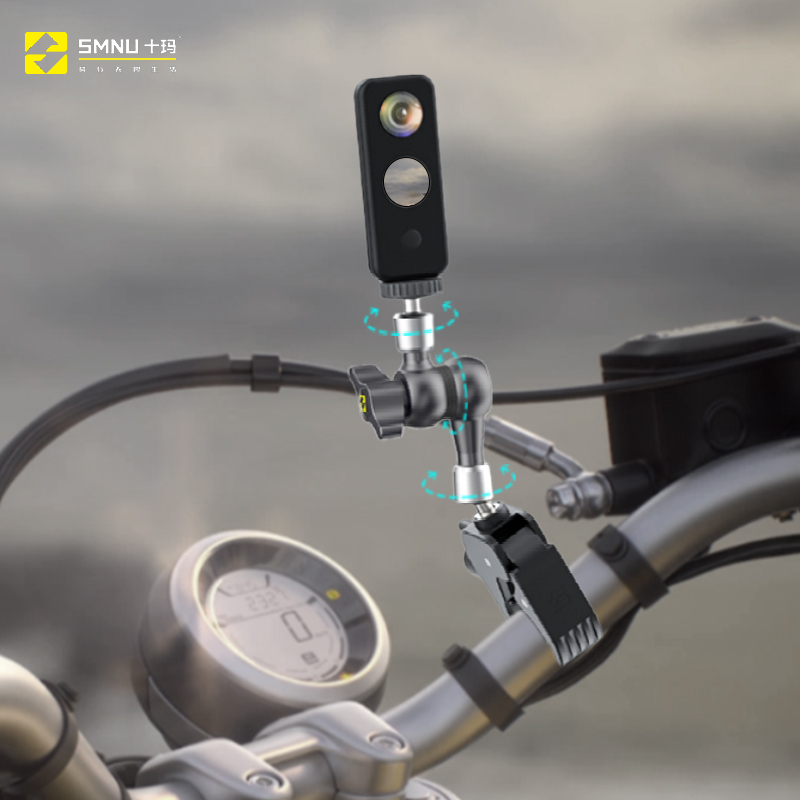
Technical Specifications That Define Superior Performance
Material Engineering and Durability Standards
The construction quality of sports camera mounts directly impacts their longevity and performance under extreme conditions. Premium mounting systems utilize aerospace-grade aluminum alloys that provide exceptional strength-to-weight ratios while resisting corrosion from environmental exposure. These materials maintain their structural integrity through temperature fluctuations, humidity variations, and repeated mechanical stress cycles that characterize adventure sports activities.
Advanced manufacturing techniques ensure that adjustment mechanisms retain their precision over thousands of positioning cycles. High-quality sports camera mounts feature sealed bearing assemblies and hardened contact surfaces that eliminate play or looseness that could compromise footage stability. The engineering emphasis on durability means that professional-grade mounting systems continue delivering reliable performance years after initial purchase.
Precision Adjustment Mechanisms and Lock Systems
The effectiveness of adjustable mounting systems depends heavily on their mechanical precision and locking reliability. Superior sports camera mounts incorporate multiple adjustment axes with independent lock mechanisms that prevent unintended movement during operation. These systems allow for fine-tuned positioning adjustments measured in degrees rather than broad approximations that characterize inferior mounting solutions.
Professional mounting systems feature tool-free adjustment capabilities that enable quick modifications while wearing gloves or in challenging environmental conditions. The locking mechanisms engage positively without requiring excessive force, yet maintain their grip under vibration and impact loads that exceed normal operational parameters. This combination of adjustment ease and holding strength defines the performance characteristics that serious riders demand from their equipment.
Application-Specific Advantages Across Different Riding Disciplines
Motorcycle Adventure and Sport Touring Applications
Motorcycle riders appreciate adjustable sports camera mounts for their ability to accommodate diverse filming requirements across varying terrain types. Highway cruising demands different camera positioning than technical off-road sections, and adjustable systems provide the flexibility to optimize footage for each riding condition. Long-distance touring benefits from the ability to vary camera angles to maintain viewer interest throughout extended journey documentation.
The vibration environment on motorcycles presents unique challenges that adjustable mounting systems address through engineered dampening characteristics. Quality mounts absorb engine vibrations and road impacts while maintaining steady footage, regardless of camera positioning. This vibration isolation becomes increasingly important as camera positions move further from the vehicle centerline where mechanical isolation is most effective.
Mountain Biking and Cycling Performance Documentation
Cycling applications benefit significantly from the compact design and lightweight construction of advanced sports camera mounts. The ability to adjust camera positioning for uphill climbing sequences, technical descents, and sprint sections ensures comprehensive coverage of performance metrics and technique analysis. Professional cyclists rely on adjustable systems to document training sessions from multiple perspectives without carrying additional mounting hardware.
The aerodynamic considerations important in competitive cycling favor streamlined mounting systems that minimize wind resistance while providing adjustment flexibility. Modern sports camera mounts achieve this balance through careful design optimization that reduces drag coefficients without compromising structural strength or adjustment range. This attention to aerodynamic efficiency becomes crucial during time trials and competitive events where marginal gains determine race outcomes.
Installation and Compatibility Considerations
Universal Mounting Interface Standards
The compatibility of sports camera mounts with diverse vehicle types and camera systems determines their practical utility for serious enthusiasts. Universal mounting interfaces ensure that investment in quality mounting hardware remains viable across camera upgrades and vehicle changes. Standardized attachment protocols eliminate compatibility concerns while providing secure mounting platforms for current and future equipment configurations.
Modern mounting systems accommodate multiple camera brands through interchangeable adapter plates that maintain the precision and security of dedicated mounting solutions. This flexibility allows riders to experiment with different camera systems without replacing their entire mounting infrastructure. The modular approach to compatibility ensures long-term value retention while supporting evolving technology requirements.
Vehicle Integration and Aesthetic Considerations
Professional riders prefer sports camera mounts that integrate seamlessly with their vehicle aesthetics while providing maximum functionality. Adjustable systems achieve this balance through compact designs that minimize visual impact when not actively filming. The ability to quickly deploy and retract mounting arms allows riders to maintain clean vehicle lines during non-filming periods while ensuring rapid deployment when recording opportunities arise.
The installation process for quality mounting systems emphasizes permanent security without requiring irreversible vehicle modifications. Professional-grade sports camera mounts utilize existing mounting points or provide reinforcement plates that distribute attachment loads across structural members. This approach ensures mounting security while preserving vehicle resale value and allowing system removal if requirements change.
Performance Optimization and Maintenance Requirements
Calibration Procedures for Maximum Effectiveness
Optimal performance from adjustable sports camera mounts requires periodic calibration to maintain precision and eliminate accumulated tolerances. Professional users establish calibration routines that verify adjustment mechanism accuracy and lock system effectiveness before critical filming sessions. These procedures ensure that expensive camera equipment remains properly positioned throughout demanding operational environments.
The calibration process includes verification of adjustment range limits, lock mechanism engagement points, and vibration dampening characteristics. Regular calibration identifies wear patterns that might compromise performance before they result in equipment failure or footage quality degradation. This proactive maintenance approach extends mounting system service life while maintaining professional performance standards.
Environmental Protection and Longevity Strategies
Environmental exposure presents ongoing challenges for sports camera mounts operating in diverse weather conditions and terrain types. Quality mounting systems incorporate protective coatings and sealed mechanisms that resist moisture infiltration and corrosive contamination. Regular maintenance procedures focus on preserving these protective features while ensuring continued adjustment precision and locking reliability.
The maintenance requirements for professional mounting systems emphasize prevention rather than repair, with scheduled lubrication and inspection intervals that identify potential issues before they compromise performance. Proper maintenance techniques extend operational life while maintaining the precision adjustment capabilities that define superior sports camera mounts. This investment in maintenance ensures continued performance excellence throughout years of demanding service conditions.
FAQ
What makes adjustable sports camera mounts superior to fixed mounting systems
Adjustable sports camera mounts provide creative flexibility and operational efficiency that fixed systems cannot match. The ability to change camera angles and positions without stopping or dismounting allows riders to capture diverse perspectives and maintain filming momentum throughout their adventures. This flexibility results in more engaging footage while reducing equipment handling requirements and associated safety risks.
How do material choices affect mounting system performance and durability
Premium materials like aerospace-grade aluminum alloys provide exceptional strength-to-weight ratios while resisting environmental degradation from moisture, temperature fluctuations, and mechanical stress. Quality materials maintain structural integrity and adjustment precision over thousands of use cycles, ensuring consistent performance throughout extended service life. The material selection directly impacts both immediate performance characteristics and long-term reliability expectations.
What installation considerations are most important for motorcycle applications
Motorcycle installations require careful attention to mounting point selection, load distribution, and vibration isolation to ensure secure attachment and optimal footage quality. Professional installations utilize existing structural mounting points or provide reinforcement plates that distribute loads appropriately without compromising vehicle integrity. Proper installation techniques ensure mounting security while maintaining adjustment precision under challenging operational conditions.
How frequently should adjustable mounting systems require maintenance and calibration
Professional-grade sports camera mounts benefit from periodic calibration every 50-100 hours of operation, with maintenance intervals depending on environmental exposure and usage intensity. Regular maintenance includes lubrication of adjustment mechanisms, verification of lock system effectiveness, and inspection for wear patterns that might compromise performance. Proactive maintenance extends service life while maintaining professional performance standards throughout demanding operational environments.