
 EN
EN

How Do Motorcycle Phone Holders Perform in High-Speed Conditions?
When you are riding at highway speeds, every component attached to your bike is put under real mechanical stress. A motorcycle phone holder that feels perfectly stable in a parking lot can behave very differently once wind resistance, road vibration, and lateral forces enter the equation. Understanding how these mounts actually perform at high speed is not just a matter of convenience — it directly affects rider safety, device protection, and the reliability of navigation when you need it most.
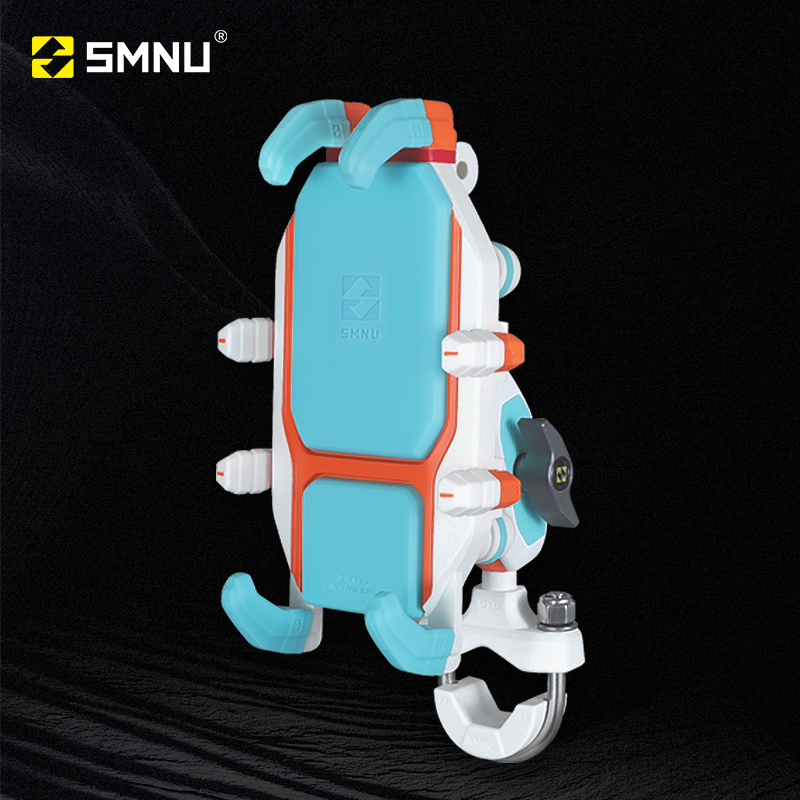
The performance of a motorcycle phone holder at high speed depends on a combination of mechanical design, mounting position, material quality, and how well the holder is matched to the specific bike and riding style. This article breaks down the key performance factors, explains what separates a reliable mount from a risky one, and gives riders the practical knowledge to evaluate their setup before hitting open roads.
The Physics Behind High-Speed Mounting Stress
Wind Load and Aerodynamic Drag on Mounted Devices
At speeds above 80 km/h, aerodynamic drag becomes a dominant force acting on any object mounted to the front of a motorcycle. A smartphone sitting in a motorcycle phone holder presents a flat surface area directly into the airstream, generating significant lift and lateral pressure. The faster the speed, the exponentially greater the force — meaning a mount that handles 60 km/h comfortably may begin to flex, rotate, or vibrate noticeably at 120 km/h.
The angle of the phone relative to the wind also matters. A perfectly vertical phone face catches maximum drag, while a slightly reclined position can reduce aerodynamic load. High-quality motorcycle phone holder designs account for this by offering adjustable tilt angles and low-profile clamping geometries that minimize the effective surface area exposed to oncoming air.
Riders who frequently travel at highway speeds should pay close attention to how the holder positions the device relative to the fairing or windscreen. A mount placed behind even a modest windscreen benefits from a significant reduction in direct wind pressure, which translates directly into better stability and less vibration transmitted to the phone.
Vibration Transmission from Engine and Road Surface
Vibration is arguably the most persistent threat to both the motorcycle phone holder and the device it carries. Motorcycles generate vibration from two primary sources: the engine's mechanical operation and the road surface irregularities transmitted through the suspension and frame. Both types of vibration travel through the handlebar or stem mount and directly into the holder structure.
High-frequency engine vibration is particularly damaging to smartphone components over time. Camera optical image stabilization systems, gyroscopes, and soldered circuit board connections are all vulnerable to sustained resonant vibration. A well-engineered motorcycle phone holder incorporates vibration-dampening materials — typically silicone pads, rubber gaskets, or elastomer inserts — between the rigid mounting arm and the device cradle to absorb and dissipate these frequencies before they reach the phone.
Road-induced vibration tends to be lower in frequency but higher in amplitude, especially on rough or uneven surfaces. This type of shock loading tests the clamping strength and locking mechanisms of the holder. A motorcycle phone holder with a secure, multi-point grip and a positive locking system will maintain device position far more reliably under these conditions than a simple friction-based clamp.
Structural Integrity Under Dynamic Load Conditions
Clamping Force and Grip Reliability at Speed
The clamping mechanism of a motorcycle phone holder is its most critical structural element when evaluated for high-speed use. At elevated speeds, the combined forces of wind drag and vibration create a dynamic load that continuously challenges the grip between the holder and the device. A clamping system that relies solely on spring tension may gradually lose its holding force as the spring fatigues or as the phone shifts incrementally with each vibration cycle.
Superior motorcycle phone holder designs use a combination of spring-loaded side arms and a positive bottom lock or top latch that physically prevents the phone from ejecting upward or forward. This dual-axis retention approach ensures that even if one axis of force is overcome momentarily, the device remains captured by the secondary retention point. For high-speed riding, this redundancy is not a luxury — it is a fundamental safety requirement.
The contact surface material between the holder arms and the phone also plays a role. Soft silicone or rubber-lined grips provide both better friction and a degree of vibration isolation at the contact points. Hard plastic-to-glass or plastic-to-metal contact surfaces offer less grip and transmit more vibration directly into the device body.
Mount Base Stability and Handlebar Attachment
The performance of a motorcycle phone holder at high speed is only as good as its connection to the bike itself. A holder mounted on a loose or improperly torqued handlebar clamp will introduce additional play into the entire system, amplifying the effects of vibration and wind load. The base mount must be tightened to the manufacturer's specified torque and checked regularly, as vibration can gradually loosen fasteners over time.
Ball-joint or multi-axis arm designs offer flexibility in positioning but can become a weak point if the joint locking mechanism is not sufficiently robust. At high speed, a ball joint that is not fully locked can allow the holder to slowly rotate or droop under sustained aerodynamic load. Riders should verify that any articulating joint in their motorcycle phone holder system locks positively and does not creep under sustained force.
Stem-mounted holders, which attach to the fork stem bolt rather than the handlebar, generally offer superior rigidity because they connect to a more structurally stable part of the bike. For riders who prioritize high-speed stability, stem mounts are worth considering as an alternative to handlebar clamp designs, particularly on bikes without a fairing to reduce wind load on the mount.
Material and Build Quality as Performance Determinants
Frame and Arm Material Selection
The material used to construct the arm and cradle of a motorcycle phone holder has a direct impact on its high-speed performance. Aluminum alloy arms offer an excellent balance of rigidity and weight, resisting flex under aerodynamic load while keeping the overall mass of the mount low. Lower mass means less inertia during vibration cycles, which reduces the amplitude of oscillation transmitted to the phone.
High-grade engineering plastics such as glass-filled nylon or polycarbonate blends are also used in quality motorcycle phone holder construction. These materials can match or exceed aluminum in specific stiffness while offering better resistance to resonant vibration due to their inherent damping properties. The key distinction is between structural-grade engineered plastics and commodity injection-molded plastics, which can become brittle under UV exposure and temperature cycling — both common conditions for a motorcycle phone holder used outdoors.
Temperature performance is a frequently overlooked factor. A motorcycle phone holder mounted in direct sunlight on a hot day can reach surface temperatures that soften lower-grade plastics, reducing clamping force and structural rigidity precisely when the rider may be traveling at speed. Materials rated for a wide operating temperature range maintain their mechanical properties across the conditions a motorcycle mount will realistically encounter.
Fastener and Hardware Quality
The screws, bolts, and locking hardware used in a motorcycle phone holder assembly are small components with outsized importance. Stainless steel or hardened alloy fasteners resist corrosion and maintain their clamping torque over time, while zinc-plated or uncoated steel fasteners can corrode and loosen, particularly in wet riding conditions. Thread-locking compounds applied to critical fasteners provide an additional layer of security against vibration-induced loosening.
Quick-release mechanisms, which allow the phone to be removed rapidly when parking, must also be evaluated for their security during riding. A quick-release that is convenient to operate by hand should still require deliberate action to disengage — it should not be possible for wind pressure or vibration alone to trigger the release mechanism. The best motorcycle phone holder designs balance ease of use with positive retention security.
Positioning Strategy for Optimal High-Speed Performance
Handlebar Position and Ergonomic Placement
Where the motorcycle phone holder is positioned on the bike significantly affects how it performs at speed. Mounting the holder at the center of the handlebar, near the stem, places it in the most structurally stable location and typically within the partial wind shadow created by the instrument cluster or fairing. This central position also keeps the phone within the rider's natural sightline without requiring significant head movement.
Mounting the motorcycle phone holder at the far ends of the handlebar increases the lever arm distance from the mounting point, which amplifies the effect of vibration and makes the holder more susceptible to oscillation. End-mounted positions also expose the device to greater direct wind load. While some riders prefer this position for visibility reasons, it represents a compromise in high-speed stability that should be understood before committing to that placement.
The height of the mount also matters. A motorcycle phone holder positioned too high above the handlebar creates a longer moment arm that magnifies vibration amplitude at the device. Keeping the mount arm as short as practically possible while still achieving a clear view of the screen is the correct engineering approach for high-speed stability.
Orientation and Screen Angle Considerations
Landscape orientation generally presents a wider but shorter profile to the wind, which can reduce aerodynamic drag compared to portrait orientation depending on the phone's dimensions. However, the choice of orientation should ultimately be driven by the navigation application being used and the rider's visual preference, with aerodynamic considerations as a secondary factor.
A slight rearward tilt of the phone screen — angling the top of the device toward the rider — serves two purposes at high speed. It reduces the effective frontal area presented to the wind, lowering drag and lift forces on the motorcycle phone holder, and it also improves screen readability by reducing glare from overhead sunlight. Most quality holders offer this tilt adjustment as a standard feature.
FAQ
Can a motorcycle phone holder damage my phone through vibration at high speed?
Sustained high-frequency vibration from motorcycle engines can potentially damage smartphone camera systems and internal components over time. A motorcycle phone holder with built-in vibration dampening — using silicone or rubber isolation materials — significantly reduces this risk. For frequent high-speed or long-distance riders, choosing a holder specifically designed with vibration isolation is a worthwhile investment in device longevity.
How do I know if my motorcycle phone holder is secure enough for highway riding?
Before any high-speed ride, physically test the holder by attempting to move the phone in all directions with moderate hand pressure. There should be no play or rotation. Check that all fasteners are properly tightened and that the clamping arms hold the phone firmly without relying solely on spring tension. A brief test ride at moderate speed before committing to highway conditions is also a practical verification step.
Does the type of motorcycle affect how a phone holder performs at speed?
Yes, significantly. Faired sport bikes and touring motorcycles provide wind protection that reduces aerodynamic load on the motorcycle phone holder, improving stability at high speed. Naked bikes and adventure motorcycles expose the mount to full wind blast, requiring a more robust holder with stronger clamping and better vibration isolation. Engine vibration characteristics also vary by motorcycle type, with single-cylinder and V-twin engines typically generating more vibration than inline-four configurations.
What is the most important feature to look for in a motorcycle phone holder for high-speed use?
The single most important feature is a positive, multi-point retention system that physically locks the phone in place rather than relying on friction or spring pressure alone. Beyond that, vibration dampening materials, a rigid low-profile arm, and a secure handlebar clamp with proper torque capacity are the features that most directly determine how well a motorcycle phone holder performs when speed, wind, and road conditions create real mechanical stress on the mount.