
 EN
EN

How Does a Motorcycle Phone Holder Anti Vibration Work on Rough Roads?
Understanding how a motorcycle phone holder anti vibration system functions on rough terrain requires examining the mechanical engineering principles behind vibration dampening technology. Modern anti-vibration phone holders utilize sophisticated shock absorption mechanisms that counteract the intense vibrations generated by motorcycle engines and irregular road surfaces. These systems employ multiple dampening layers, including silicone buffers, spring-loaded mechanisms, and gyroscopic stabilization components that work together to isolate your mobile device from harmful oscillations that could damage sensitive internal components or make screen interaction impossible during rides.
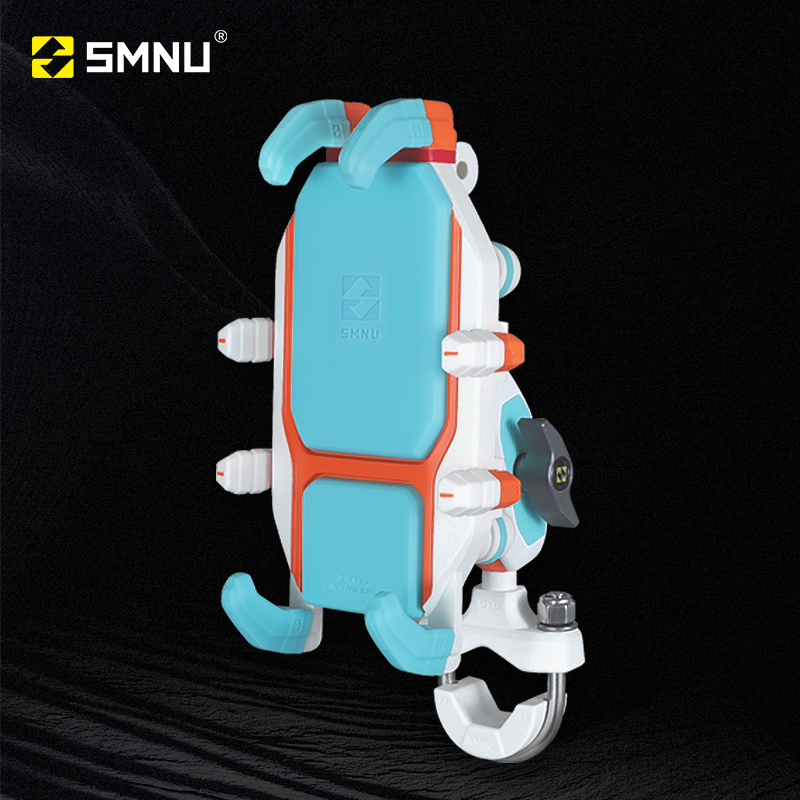
The effectiveness of a motorcycle phone holder anti vibration system becomes particularly crucial when navigating challenging road conditions such as gravel paths, pothole-riddled surfaces, or off-road terrain. High-frequency vibrations transmitted through the motorcycle frame can cause screen readability issues, accelerometer malfunctions, and even physical damage to delicate smartphone components including camera stabilization systems and internal circuit boards. Professional-grade anti-vibration holders address these concerns through carefully engineered dampening technologies that maintain phone stability while preserving full functionality of touchscreen interfaces and camera systems during extended rides.
Vibration Dampening Mechanisms in Motorcycle Phone Holders
Multi-Layer Shock Absorption Systems
The foundation of effective motorcycle phone holder anti vibration technology lies in sophisticated multi-layer shock absorption systems that create physical barriers between road vibrations and your mobile device. These systems typically incorporate graduated density materials, starting with firm mounting connections to the motorcycle handlebar or windscreen, progressing through intermediate dampening layers of varying stiffness, and culminating in soft contact surfaces that cradle the phone without restricting access to ports or buttons. Engineering teams design these layers to target specific frequency ranges, ensuring comprehensive vibration isolation across the entire spectrum of oscillations encountered during motorcycle operation.
Advanced motorcycle phone holder anti vibration designs utilize viscoelastic polymers and specialized rubber compounds that exhibit optimal dampening characteristics across wide temperature ranges. These materials maintain their shock-absorbing properties in extreme weather conditions, from freezing winter rides to scorching summer highway travel. The molecular structure of these dampening materials allows them to convert kinetic energy from vibrations into heat energy through internal friction, effectively dissipating harmful oscillations before they can reach your smartphone's sensitive internal components.
Spring-Loaded Isolation Technology
Spring-loaded isolation systems represent another critical component in professional motorcycle phone holder anti vibration designs, utilizing precisely calibrated metal or composite springs that provide active vibration cancellation. These springs function as mechanical filters, absorbing and redirecting vibrational energy while maintaining stable phone positioning during acceleration, braking, and cornering maneuvers. The spring constant and dampening coefficient calculations ensure optimal performance across various motorcycle types, from lightweight sport bikes generating high-frequency engine vibrations to heavy touring motorcycles producing lower-frequency oscillations.
Implementation of spring-loaded systems in motorcycle phone holder anti vibration technology requires careful consideration of resonant frequency matching to prevent amplification of specific vibration frequencies that could worsen stability rather than improve it. Engineers conduct extensive field testing across different motorcycle models and riding conditions to optimize spring tension and dampening characteristics. The result is a dynamic system that automatically adjusts to varying vibration intensities, providing consistent phone protection whether cruising on smooth highways or navigating rough backwoods trails.
Road Surface Impact on Vibration Transmission
Frequency Analysis of Different Road Conditions
Different road surfaces generate distinct vibration frequency patterns that challenge motorcycle phone holder anti vibration systems in unique ways. Smooth asphalt typically produces low-amplitude, high-frequency vibrations primarily from engine operation and tire contact, while gravel roads introduce irregular, high-amplitude oscillations from stone impacts and surface irregularities. Concrete highways with expansion joints create periodic impact vibrations that can overwhelm inadequate dampening systems, potentially causing phone mounting failures or device damage during extended highway riding sessions.
Professional motorcycle phone holder anti vibration systems must accommodate frequency ranges from sub-sonic oscillations caused by road surface undulations to ultrasonic vibrations generated by high-RPM engine operation and wind buffeting. Spectral analysis of various riding conditions reveals that effective vibration isolation requires dampening capabilities across frequencies ranging from approximately 5Hz to 2000Hz, with particular attention to the 40-200Hz range where most smartphone damage occurs due to internal component resonance frequencies.
Terrain-Specific Vibration Challenges
Off-road motorcycle riding presents extreme challenges for motorcycle phone holder anti vibration technology, as unpaved surfaces generate complex, multi-directional vibration patterns that can overwhelm conventional dampening systems. Rocky terrain produces sharp impact vibrations with rapid acceleration changes, while sandy surfaces create sustained oscillations with unpredictable amplitude variations. Motorcycle phone holder anti vibration systems designed for off-road applications must incorporate additional safeguards including enhanced mounting security and increased dampening capacity to handle these demanding conditions.
Urban riding conditions present their own unique vibration challenges, including stop-and-go traffic patterns that subject phone holders to repeated acceleration and deceleration forces, pothole impacts that generate severe shock loads, and construction zone surfaces that produce sustained high-amplitude vibrations. Effective motorcycle phone holder anti vibration designs must maintain performance consistency across these varied urban environments while preserving easy phone access for navigation and communication needs during city commuting.
Engineering Principles Behind Vibration Isolation
Resonance Frequency Management
Successful motorcycle phone holder anti vibration design requires sophisticated understanding of resonance frequency management to prevent vibration amplification that could worsen phone stability rather than improve it. Every mechanical system, including smartphones and their mounting hardware, possesses natural resonant frequencies where external vibrations become amplified rather than dampened. Engineers must carefully tune dampening systems to avoid exciting these resonant frequencies while maintaining effective isolation across the broader vibration spectrum encountered during motorcycle operation.
Modern smartphone components exhibit resonant frequencies in the 100-300Hz range, particularly affecting camera stabilization systems, accelerometers, and gyroscopes that rely on precise positioning for proper function. Motorcycle phone holder anti vibration systems utilize tuned mass dampeners and frequency-selective filtration to isolate these sensitive components from harmful resonance excitation. Advanced designs incorporate multiple dampening stages with different resonant characteristics to create broad-spectrum protection against frequency-specific damage while maintaining reliable mounting security during aggressive riding conditions.
Force Distribution and Load Management
Effective motorcycle phone holder anti vibration systems must manage both vibrational forces and static loads from wind resistance, acceleration forces, and gravitational effects during motorcycle operation. Load distribution across multiple contact points prevents stress concentration that could lead to mounting failures or phone damage during high-speed riding or off-road adventures. Engineering analysis reveals that optimal force distribution requires carefully designed contact surfaces that spread loads evenly across phone cases while maintaining secure grip without restricting thermal management or signal reception.
Dynamic load management in motorcycle phone holder anti vibration systems involves real-time adaptation to changing force vectors as motorcycles lean through corners, accelerate up inclines, or brake for obstacles. Advanced mounting systems incorporate multi-axis adjustment capabilities that maintain optimal phone orientation regardless of motorcycle attitude while preserving vibration isolation effectiveness. This dynamic response capability ensures consistent phone protection and usability across the full range of motorcycle operating conditions, from gentle touring rides to aggressive sport riding sessions.
Material Science in Anti-Vibration Design
Polymer Chemistry for Vibration Dampening
The selection of appropriate dampening materials represents a critical factor in motorcycle phone holder anti vibration performance, requiring deep understanding of polymer chemistry and material behavior under dynamic loading conditions. Silicone-based elastomers provide excellent vibration isolation characteristics due to their viscoelastic properties, which allow them to deform under load while dissipating energy through molecular-level friction. These materials maintain consistent dampening performance across wide temperature ranges and resist degradation from UV exposure, ozone, and petroleum-based contaminants commonly encountered in motorcycle environments.
Advanced motorcycle phone holder anti vibration designs utilize engineered composite materials that combine multiple polymer types to achieve optimal performance characteristics. Thermoplastic urethanes provide durability and tear resistance, while specialized rubber compounds offer superior vibration absorption properties. Material engineers optimize polymer formulations to achieve specific durometer ratings that balance flexibility for vibration absorption with rigidity for secure mounting, ensuring long-term performance reliability under continuous vibration exposure and environmental stress.
Metal Component Integration
Metal components in motorcycle phone holder anti vibration systems serve crucial structural functions while contributing to overall dampening effectiveness through careful material selection and geometric design. Aluminum alloys provide lightweight strength for mounting brackets and adjustment mechanisms, while steel components offer enhanced durability for high-stress connection points. The interface between metal mounting hardware and dampening materials requires precise engineering to prevent galvanic corrosion, thermal expansion mismatches, and stress concentration that could compromise long-term reliability.
Strategic placement of metal components within motorcycle phone holder anti vibration assemblies allows for tuned dampening responses that complement polymer-based vibration isolation. Perforated metal sections can function as acoustic dampeners that reduce wind noise transmission, while precision-machined surfaces ensure optimal contact pressure distribution across dampening interfaces. Advanced designs incorporate threaded adjustment mechanisms that maintain calibrated dampening characteristics throughout the holder's service life, compensating for material aging and wear that might otherwise degrade vibration isolation performance.
FAQ
How effective is motorcycle phone holder anti vibration technology on extremely rough terrain?
Motorcycle phone holder anti vibration systems can provide significant protection on rough terrain, typically reducing vibration transmission by 70-90% compared to rigid mounting systems. However, effectiveness depends on the specific dampening technology used and the severity of terrain conditions. High-quality systems with multi-stage dampening can handle most off-road conditions, but extreme terrain like boulder fields or severe washboard surfaces may still present challenges for any vibration isolation system.
Does anti-vibration mounting affect smartphone camera quality during rides?
Proper motorcycle phone holder anti vibration systems actually improve smartphone camera performance by isolating the device from vibrations that can trigger optical image stabilization systems inappropriately or cause motion blur. Modern smartphones rely on accelerometers and gyroscopes for camera stabilization, and excessive vibrations can overwhelm these systems, resulting in poor photo and video quality. Effective vibration isolation preserves normal camera function and can enable crisp photography even while riding.
Can motorcycle phone holder anti vibration systems handle different phone sizes equally well?
Most quality motorcycle phone holder anti vibration systems accommodate various phone sizes through adjustable mounting mechanisms, but vibration isolation effectiveness can vary based on device weight and center of gravity. Heavier phones may require additional dampening capacity, while lighter devices might be over-dampened by systems designed for larger smartphones. The best anti-vibration holders include adjustable dampening settings or universal designs that maintain optimal performance across different device types and sizes.
How long do anti-vibration materials in motorcycle phone holders typically last?
The lifespan of motorcycle phone holder anti vibration materials depends on usage frequency, environmental conditions, and material quality. High-grade silicone and polymer dampening components can maintain effectiveness for 3-5 years of regular use, while lower-quality materials may degrade within 1-2 years. UV exposure, temperature extremes, and contamination from road chemicals can accelerate material aging. Regular inspection of dampening components and replacement when softening or cracking occurs ensures continued vibration protection for mounted devices.